What Makes a Good Metal Enclosure Fabrication Process?
- Manufacturers
- September 10, 2026
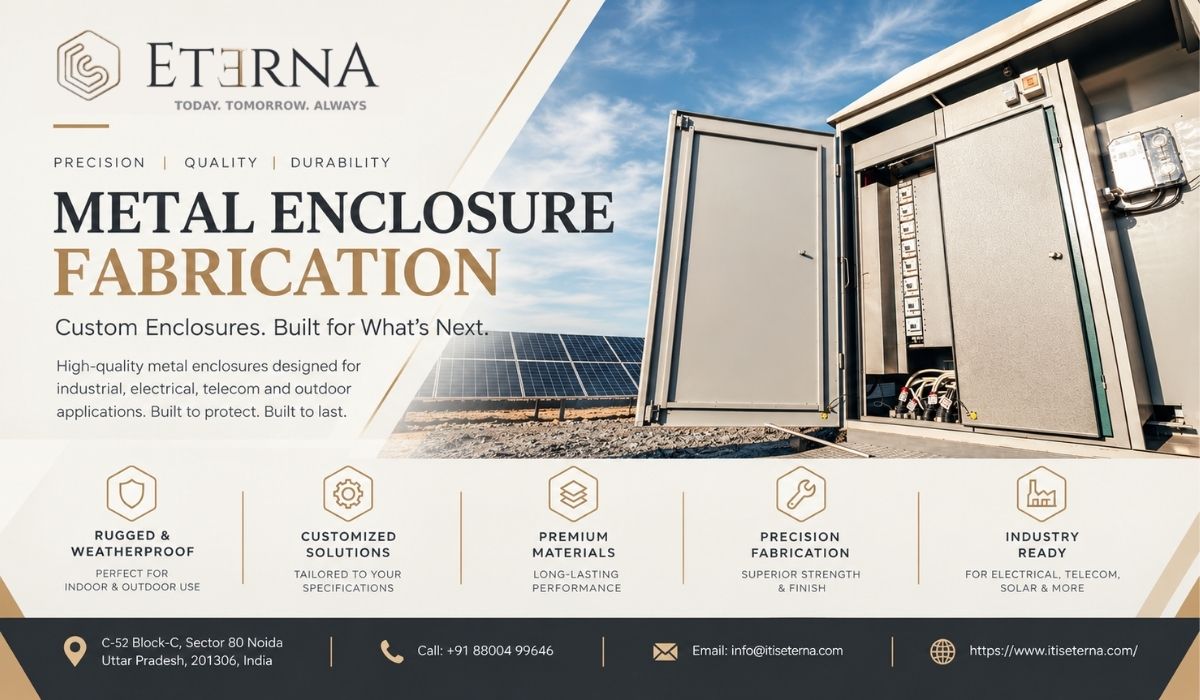
A metal enclosure may look like a simple box, but getting it right takes more than cutting and joining sheets of metal. The enclosure has to fit its intended equipment, protect internal components, and withstand the conditions in which it will be used. Small errors in dimensions, bends, holes, or finishing can create problems during assembly. That is why a well-planned Metal Enclosure Fabrication process matters. From material selection to final inspection, each stage can affect the performance and reliability of the finished enclosure.
5 Key Stages of Metal Enclosure Fabrication
1. Start With Clear Design Requirements
Fabrication should begin with a clear understanding of what the enclosure needs to do. Dimensions, mounting points, openings, material thickness, ventilation requirements, and access to internal components all need consideration.
A good design also accounts for how the enclosure will be installed and maintained. If a technician cannot easily reach a component or cable connection, even a well-made enclosure may not be practical.
2. Choose the Right Metal
Material selection depends on where and how the enclosure will be used. Different applications may require different levels of strength, corrosion resistance, weight, or durability.
Steel, stainless steel, and aluminium are common choices, but the right option depends on the application. Indoor equipment may have different requirements from an enclosure exposed to moisture, dust, temperature changes, or demanding industrial conditions.
Material thickness matters too. It needs to provide enough rigidity without making the enclosure unnecessarily heavy or difficult to handle.
3. Use Accurate Cutting and Forming
Once the material is selected, accurate fabrication becomes critical. Cutting, punching, drilling, and bending need to follow the approved design dimensions.
A small dimensional error can affect several parts at once. A mounting hole may not line up. A panel may not close properly. Components could sit too close to an edge.
Accurate cutting, punching, drilling, and bending processes help maintain repeatable dimensions, especially when multiple enclosures are required.
4. Pay Attention to Welding and Assembly
Joining the fabricated sections is another important stage. Welds need to be suitable for the material and application, while assembled panels should remain properly aligned.
Poorly executed joints can affect strength and appearance. They may also leave areas that require additional finishing before the enclosure is ready for use.
Depending on the design, fabrication may involve welded frames, removable panels, brackets, hinges, fasteners, or other components. Each part should work together rather than being treated as a separate piece.
5. Finish and Inspect the Enclosure
The final stage is not just about making the enclosure look better. Surface preparation and finishing can improve durability and provide protection appropriate to the intended environment.
Inspection should cover dimensions, openings, mounting points, joints, surface condition, and overall assembly. For electrical or industrial applications, additional checks may be required based on the enclosure’s specific purpose.
A final inspection can catch problems before the enclosure reaches installation, where correcting them may take considerably more time.
What Should Buyers Consider?
When selecting a fabrication partner, price is only one factor. Buyers should look at material options, fabrication capabilities, design support, production consistency, finishing methods, and quality-control practices.
It is also worth discussing the intended application before production begins. Sharing drawings, dimensions, equipment requirements, and environmental conditions can help the fabricator understand what the enclosure needs to achieve. For custom projects, clear communication early in the process can prevent costly changes later.
Making Metal Enclosure Fabrication More Reliable
A good fabrication process connects design, material selection, precision manufacturing, assembly, finishing, and inspection. None of these stages works in isolation.
When each step is planned around the enclosure’s actual application, the finished product is more likely to fit properly, protect its internal components, and perform as expected. Metal Enclosure Fabrication requires attention to detail at every stage, from initial design through final quality checks.
Eterna Global Solutions provides fabrication solutions with attention to material selection, manufacturing accuracy, finishing, and quality control.
To know more, visit here: https://www.itiseterna.com/
FAQs
What is Metal Enclosure Fabrication?
It is the process of cutting, forming, joining, finishing, and assembling metal to create an enclosure for equipment or components.
Which metals are commonly used for enclosures?
Steel, stainless steel, and aluminium are common options. The choice depends on strength, corrosion resistance, weight, and application requirements.
Why is accurate fabrication important?
Accurate dimensions help ensure that panels, mounting points, openings, and internal components fit together correctly.
What should be considered when designing a metal enclosure?
Dimensions, material thickness, mounting requirements, access, ventilation, cable openings, environmental conditions, and maintenance needs should all be considered.
How can buyers choose a fabrication partner?
Look at fabrication capabilities, material options, finishing processes, quality checks, production consistency, and the supplier’s ability to meet the project’s specific requirements.