Inside the Best School In India: Where Learning Goes Beyond the Classroom
- Education
- September 15, 2026
A school can have good classrooms, qualified teachers and strong exam results. But that does not tell the whole story. For many parents, the real question is what happens after the class ends. Do children get opportunities to explore interests, become more independent, work with others and learn how to handle everyday responsibilities? That broader experience is often what families look for when comparing the Best School In India. In a residential setting, learning does not stop when the school bell rings. It becomes part of daily life.
1. Learning Beyond Textbooks
Academic performance still matters. It gives students a strong foundation for higher education and future choices. But children also need space to question, communicate, and try things for themselves.
A strong school environment can combine the CBSE curriculum with interactive classrooms, technology, public speaking, debates, hobbies, and clubs. That balance matters. A child who learns to present an idea confidently or work through a practical task is developing skills that do not always show up in a report card.
2. Residential Life Teaches Responsibility
Boarding changes the rhythm of a child’s day. Students share spaces, follow routines, look after their belongings and learn to live with people from different backgrounds.
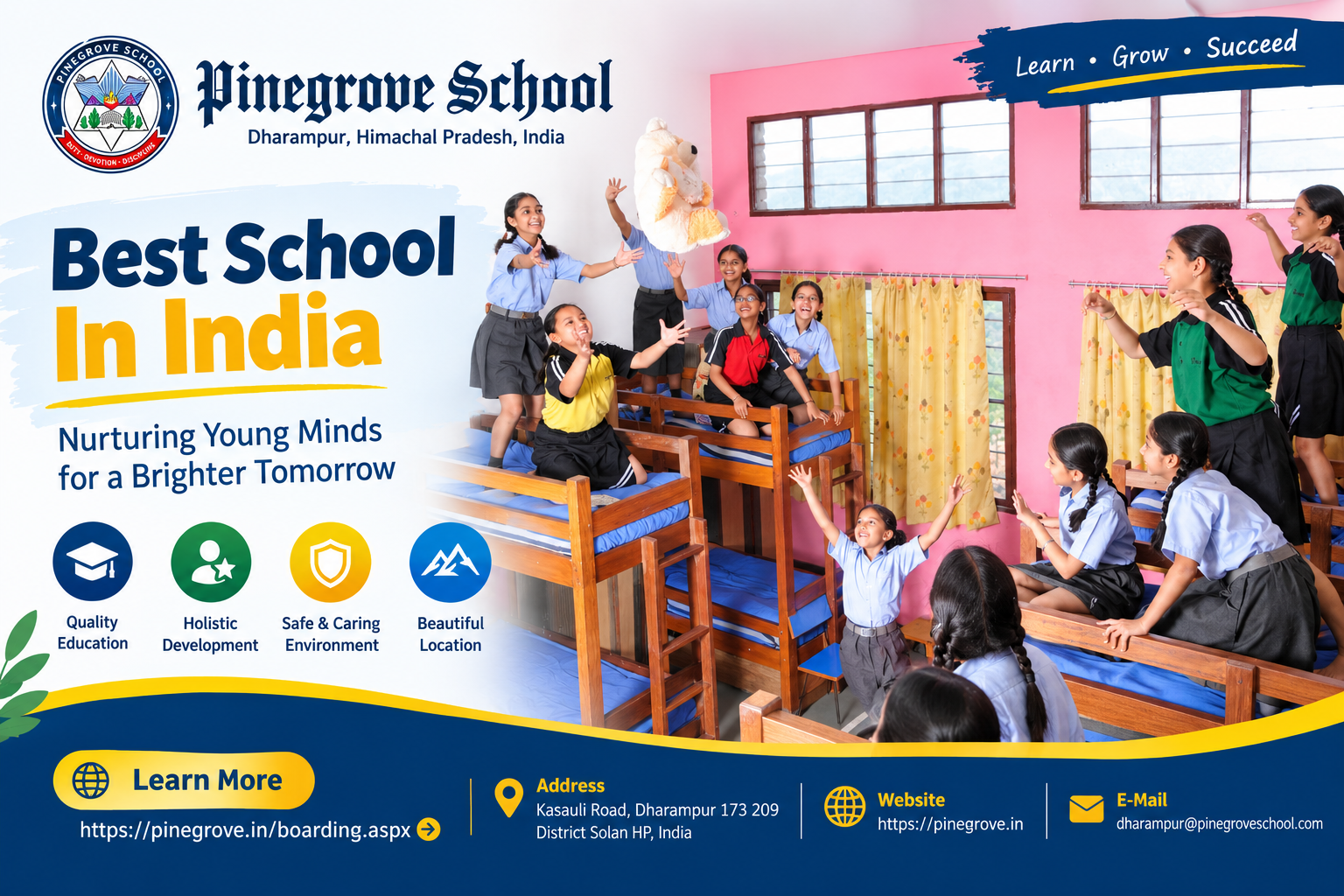
Pinegrove School, a fully residential CBSE school established in 1991, has separate hostel arrangements for boys and girls, with matrons and wardens supervising the dormitories. These details may sound ordinary. They are not. Learning to manage everyday life gradually builds independence.
3. Activities Are Part of Education
A well-rounded school should give children reasons to step away from their books. Sports, music, art, gardening, drama, debating and other hobbies can reveal interests that a conventional classroom may not.
A well-planned activity programme can include sports such as swimming, basketball and cricket alongside music, dance, acting, art, gardening and debating. The value is not simply in collecting certificates. A student may discover confidence on a stage, patience while learning an instrument, or teamwork on a sports field.
4. A Community That Shapes Character
Living and learning alongside others teaches lessons that cannot always be scheduled into a timetable. Students have to listen, cooperate, disagree respectfully and adjust to different personalities.
For parents, this is worth considering because the quality of everyday interactions can shape a child’s experience just as much as formal lessons do.
5. Choosing the Right School
There is no single feature that makes a school right for every child. Parents should look at academics, teaching quality, student support, residential arrangements, activities, safety, facilities, and the overall approach to education.
The better question may be simple: does the school give a child enough opportunities to learn, participate, make mistakes, and grow? The answer can tell you much more than a list of facilities ever will.
Choosing a School That Builds More Than Academic Results
A strong school experience is built through the small moments that happen beyond the timetable. The chance to explore an interest, solve a problem independently, work with others or take responsibility for everyday tasks can shape a child in lasting ways. For parents comparing the Best School In India, these experiences deserve as much attention as academic results.
FAQs
1. What should parents look for in a good residential school?
Look at academics, student support, boarding arrangements, activities, safety, facilities and the school’s overall approach to student development.
2. Why are extracurricular activities important in school?
They help children explore interests while developing skills such as teamwork, communication, creativity and confidence.
3. Is boarding school useful for developing independence?
Yes. Daily routines, shared responsibilities, and community living can help students gradually become more self-reliant.
4. What curriculum does the school follow?
Pinegrove School is affiliated with the Central Board of Secondary Education (CBSE) and provides education through Class 12.
5. Where is the school located?
Pinegrove has campuses at Dharampur and Subathu in Solan district, Himachal Pradesh.