Data Science & Applied AI: Engineering the Future of Intelligence
- Education, Services, Software, Technology
- September 14, 2026
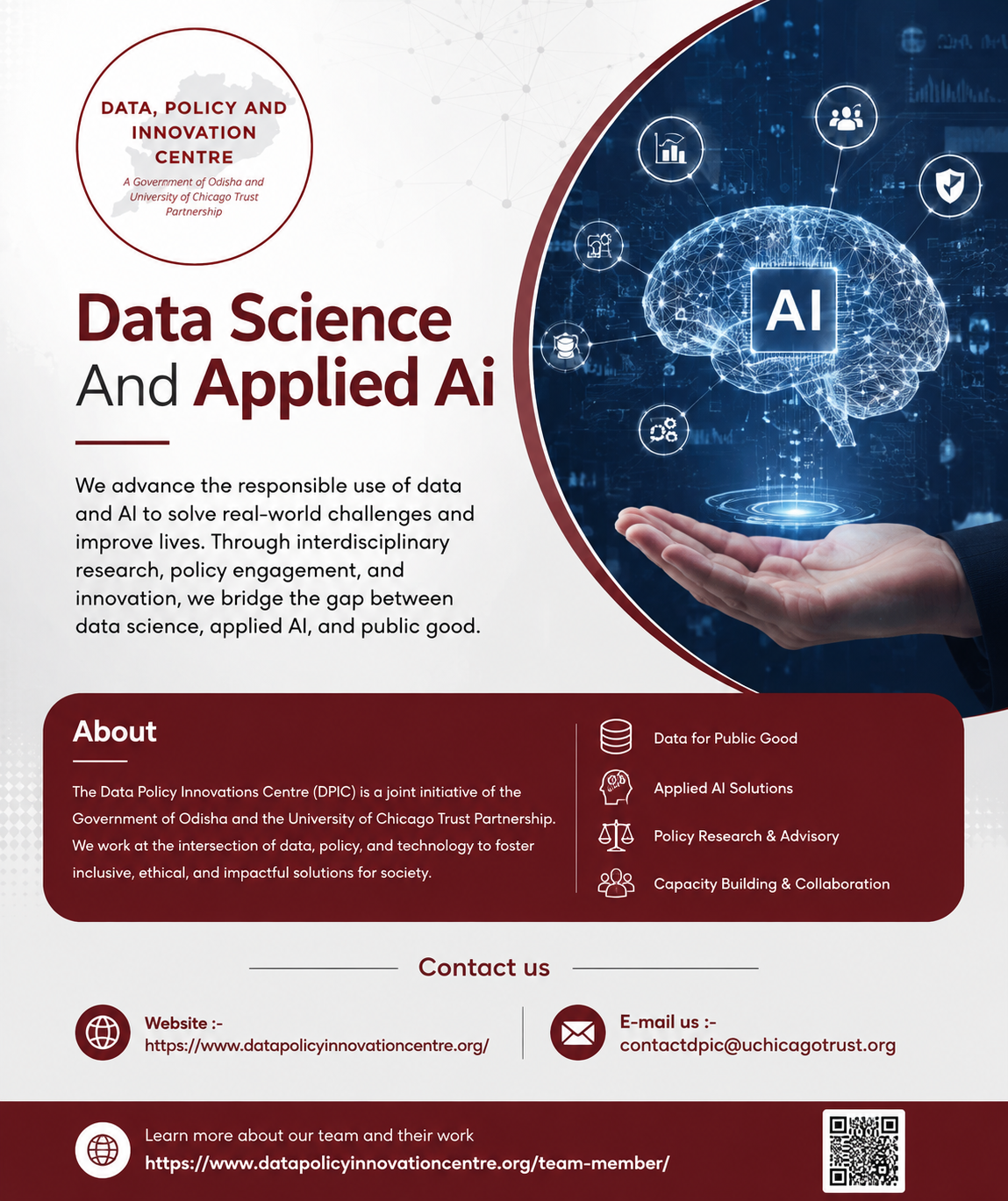
Data is now part of almost every major decision, from public health and education to business and governance. But having large amounts of information is not enough. The real value comes from understanding patterns, testing ideas, and turning complex datasets into useful decisions. Data Science And Applied Ai brings these capabilities together, combining statistical methods, machine learning, analytics, and artificial intelligence to solve practical problems.
What Data Science and Applied AI Actually Do
Data science deals with collecting, organising, analysing, and interpreting data. Applied AI takes this further by using computational models to perform tasks such as prediction, classification, pattern recognition, and automated decision support.
The distinction is useful. Data science can reveal what is happening in a dataset. Applied AI can help build systems that respond to those insights at scale.
The strongest work often combines both. A model may identify a pattern, but domain knowledge is still needed to understand what the pattern means and how it should be used.
From Data to Real-World Decisions
The impact becomes clearer when these technologies are applied to actual problems. Government departments, for example, deal with large administrative datasets covering citizens, services, education, health, employment, and other areas. Analysing these datasets properly can reveal gaps that are difficult to see through conventional reporting.
The Data, Policy and Innovation Centre works at this intersection. DPIC is an academia-government data partnership between the Government of Odisha and the University of Chicago Trust. Its work combines data curation, advanced analytics, AI, and capacity building to strengthen data-driven governance.
Its projects include AI-based citizen services, public health analytics, skilling, social protection, and migration. These are not technology exercises for their own sake. The aim is to produce information that can support better public decisions.
Why Applied Intelligence Needs Strong Data
AI systems are only as useful as the data, methods, and context behind them. Poorly structured data can produce unreliable results. Incomplete datasets can hide important groups or patterns. A technically accurate model can still lead to poor decisions if the underlying question is wrong.
This is where multidisciplinary expertise matters.
DPIC’s team includes data scientists, analysts, engineers, economists, policy researchers, and AI researchers. For example, its Senior Data Scientist Yashaswi Mohanty works with large administrative datasets and research areas including data science, statistics, econometrics, environmental regulation, skilling, and governance.
Such a mix allows technical analysis to be considered alongside policy requirements and real-world constraints.
Building the Future Through Practical AI
Advanced algorithms alone will not determine how useful AI becomes. The real value lies in connecting these technologies responsibly to data, people, and the systems they are intended to improve. Better data infrastructure, stronger analytical capacity, skilled teams, and clear policy objectives all matter. Applied AI becomes more valuable when it addresses a defined problem and produces information people can actually use.
This approach is already visible in projects involving citizen grievance systems, public health, and data-driven skilling in Odisha. Data Science and Applied AI can move beyond experimentation when supported by strong data practices and clear real-world objectives. The Data, Policy and Innovation Centre (DPIC) demonstrates how this approach can contribute to practical, evidence-based governance.
FAQs
1. What is data science and applied AI?
Data science uses statistical and analytical methods to understand data, while applied AI uses artificial intelligence techniques to solve practical problems and support decisions.
2. How is applied AI different from traditional data analysis?
Traditional analysis generally focuses on understanding existing data. Applied AI can use machine learning and other computational methods to identify patterns, make predictions, or automate specific tasks.
3. Where can data science and applied AI be used?
They can be applied in healthcare, education, governance, finance, business, environmental management, public services, and many other fields.
4. Why is data quality important for AI?
Reliable data improves the quality of analysis and reduces the risk of misleading results. Data quality, context, and appropriate modelling all influence how useful an AI system becomes.
5. How can AI support public policy?
AI can analyse large datasets, identify patterns, support service delivery, and provide evidence that helps policymakers understand complex public challenges.