Beatles in Delhi: Where Western Rock Met the Sounds of India
- Services
- August 27, 2026
The story of Beatles in Delhi is a fascinating chapter in the history of global music. When The Beatles arrived in New Delhi in July 1966, their short visit created a remarkable meeting between Western rock culture and India’s rich musical traditions. Their journey was not simply a stopover; it became part of a larger musical transformation that connected Indian instruments and sounds with audiences around the world.
The Beatles’ Historic Visit to Delhi
The Beatles’ first visit to India took place during their 1966 world tour. After traveling through countries including Japan and the Philippines, the band stopped in Delhi on their return journey. George Harrison had a particular interest in Indian music and wanted to find a quality sitar in India. The other members of the band eventually joined him for the Delhi visit.
Their time in Delhi was brief, but it gave them an opportunity to experience Indian culture and explore the city. The Beatles visited places around Delhi and attracted considerable public attention wherever they went. Their visit demonstrated how strongly Indian culture and music could capture the imagination of internationally celebrated musicians.
Rikhiram and the Beatles’ Musical Connection
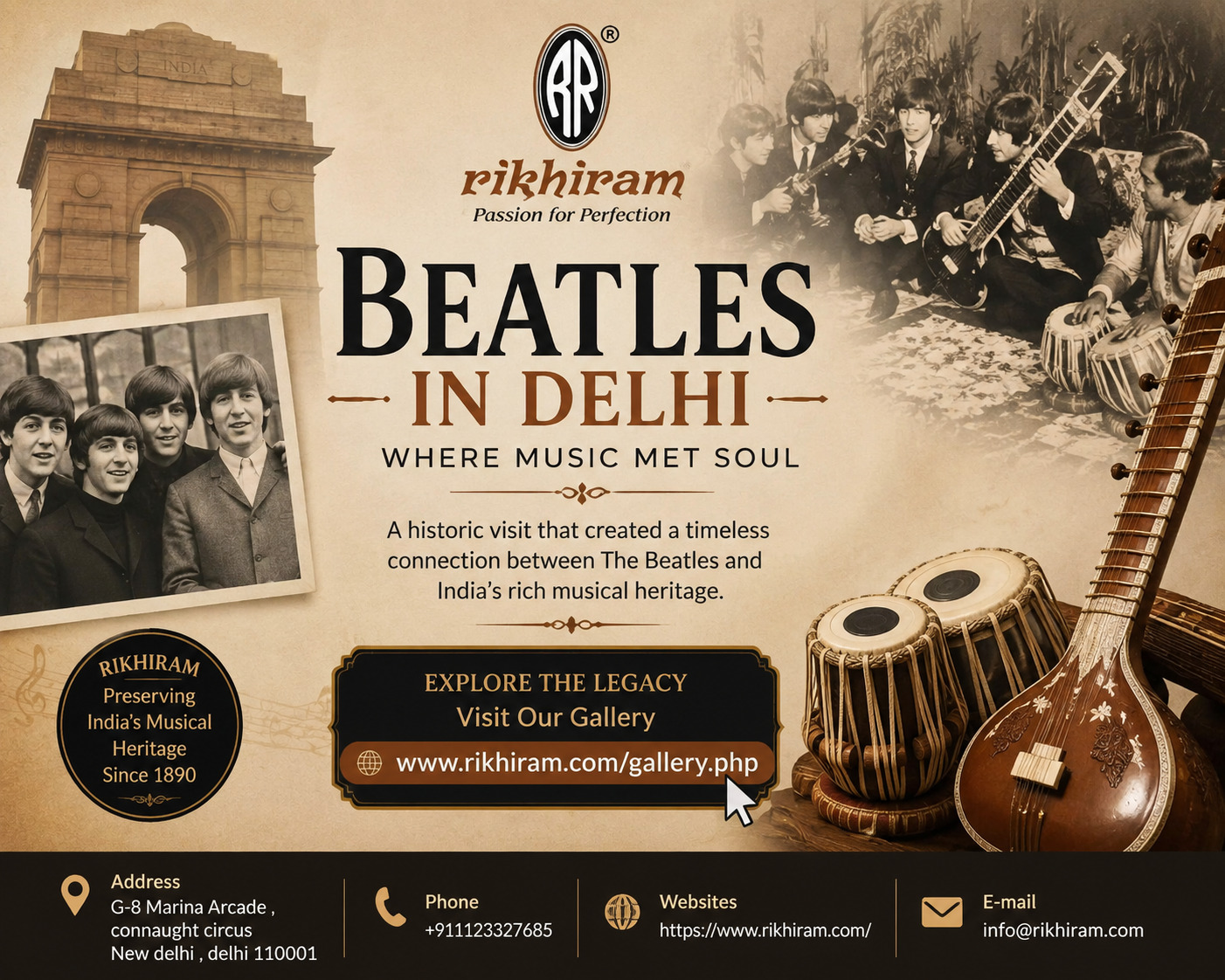
One of the most memorable moments of the Beatles in Delhi story was their visit to Rikhi Ram & Sons, a renowned Indian musical-instrument establishment in Connaught Place. The band explored traditional instruments there, with George Harrison particularly interested in the sitar. Historical accounts describe a demonstration of Indian instruments for Harrison and the other Beatles.
For Rikhiram, this connection represents more than a famous photograph or historical anecdote. The company’s own archive documents its association with George Harrison and The Beatles, while its present-day gallery preserves images and stories connected with this important musical encounter.
When Western Rock Met Indian Classical Music
The Beatles were already experimenting with Indian musical ideas before their Delhi visit. George Harrison’s interest in the sitar and his relationship with Indian classical music became increasingly important to his artistic development. Songs such as “Love You To” demonstrated how Indian instruments and musical concepts could become an integral part of Western popular music.
This cultural exchange helped introduce millions of listeners to sounds that were previously unfamiliar to many Western audiences. The sitar, tabla, drone-based textures and other elements of Indian music became increasingly recognizable within international popular culture.
Delhi as a Bridge Between Musical Traditions
The significance of the Beatles in Delhi story lies in this meeting of two different musical worlds. Delhi was already home to a deep tradition of classical music, skilled instrument makers and generations of musicians. The Beatles arrived from a rapidly changing Western music scene and showed a genuine curiosity about Indian instruments.
Rikhiram became part of this cultural bridge. Its long association with Indian musical instruments and legendary musicians helped create a setting where international artists could discover traditional Indian craftsmanship. Today, Rikhiram continues this heritage through its instruments, archives and musical legacy.
Preserving the Beatles in Delhi Legacy
The story continues to inspire musicians, historians and music enthusiasts. Rikhiram’s online gallery preserves photographs and archival material connected with the Beatles and other prominent figures from the world of music.
For anyone interested in the history of Indian and Western musical exchange, the Rikhiram Indian Musicals Instruments legacy offers a unique perspective. Its gallery provides an opportunity to explore how a visit to Delhi became part of a much larger story about cultural curiosity, musical experimentation and international influence.
Explore the historic gallery: https://www.rikhiram.com/gallery.php
FAQs About Beatles in Delhi
1. When did The Beatles visit Delhi?
The Beatles visited New Delhi in July 1966 during their return journey from their Asian tour.
2. Why did George Harrison want to visit Delhi?
George Harrison was deeply interested in Indian music and wanted to obtain a quality sitar in India.
3. Did The Beatles visit Rikhiram in Delhi?
Yes. Historical accounts record that The Beatles visited Rikhi Ram & Sons in Connaught Place to explore Indian musical instruments.
4. How did Indian music influence The Beatles?
Indian musical traditions, particularly the sitar and other classical instruments, influenced the band’s experimentation and helped bring Indian sounds to a much wider international audience.
5. Where can I explore Rikhiram’s Beatles archive?
You can explore photographs and archival material through the Rikhiram Gallery online. https://www.rikhiram.com/gallery.php